
Delta County MI-VINE Release Coverage
MI-VINE is Michigan's free and confidential custody and court-event information and notification service. The state describes access online through VINELink and by telephone. Participating county-jail events may include release, transfer, and escape, and Michigan prison custody supports general release notice. The live agency selector and result must still confirm Delta participation for the person being checked.
A MI-VINE status belongs to the reporting agency. “Released” or “out of custody” supports only that the selected agency no longer holds the person. Someone who leaves the Delta County Correctional Facility may return to the community, enter MDOC custody, move to another county, or pass into federal or immigration custody. The label does not decide among those paths by itself.
County jail and state prison also use different durable records. The Sheriff owns the Delta County booking and release entry. MDOC uses OTIS and its prison or supervision records. A federal person requires the BOP or federal trail because VINELink does not cover BOP custody. MI-VINE is fast notice, not a universal custody database.
Search Delta County Inmates on VINELink
Use VINELink for a specific person, not as a list of everyone released in Delta County. The county publishes no official recent-release feed, so MI-VINE can provide a named-person custody update when the agency participates. A result should be matched with enough detail to avoid choosing another person with a similar name.
- Open VINELink and choose Michigan as the state.
- Select the People or Offender search. Enter the person's name or offender or booking identifier when known.
- Narrow the search to the correct agency or location if that choice is offered. Do not assume every Michigan result is tied to Delta County.
- Compare the identifiers in each match. Open only the record that fits the person and custody episode.
- Read the custody status, reporting agency or location, and status date together.
- If there is no match, try a known alias or identifier, check the agency choice, and move to the proper record custodian.
The official VINELink search and notification entry point captured in the image below shows the state selection and People or Offender route.
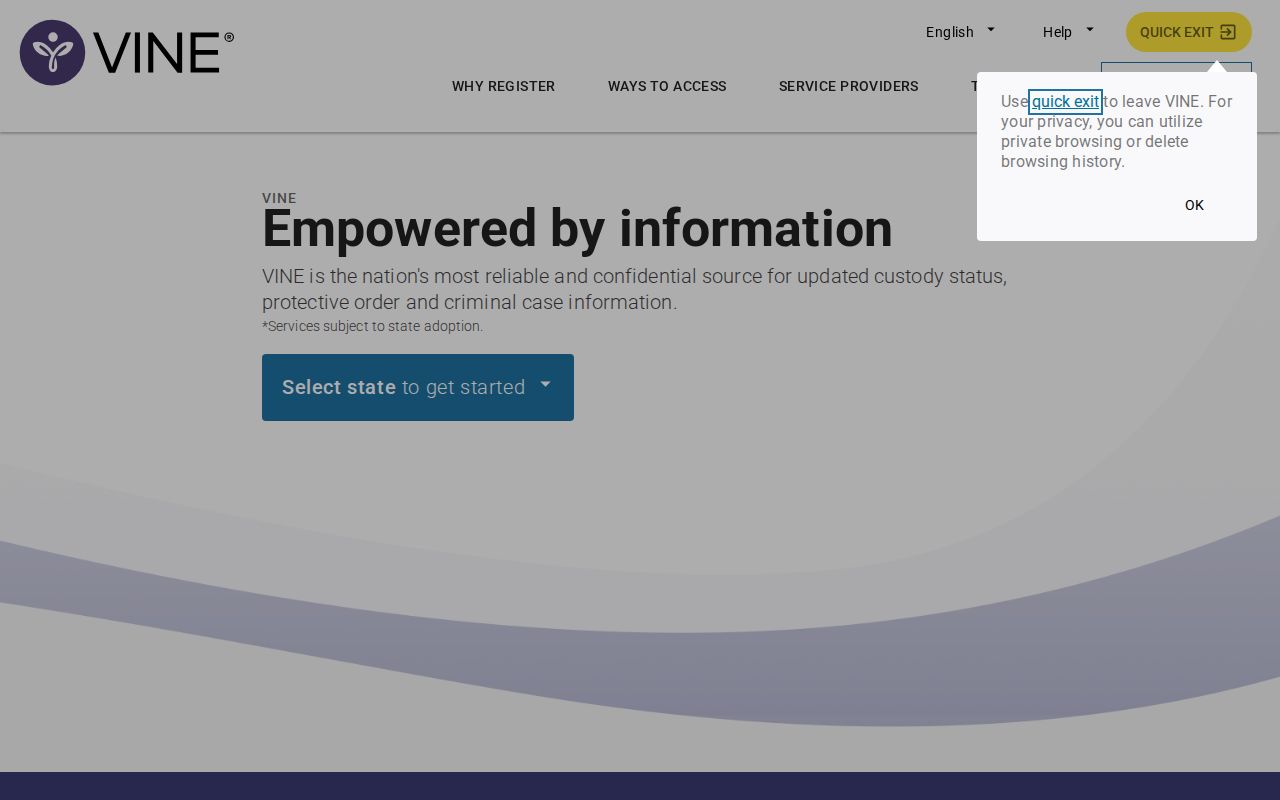
The live portal remains primary because agency participation, labels, and available notification methods can change after a screenshot is captured.
A no-result is inconclusive. It can reflect an alias, a spelling difference, a delay, agency participation, a transfer into another system, or search behavior. Call the Delta County Correctional Facility at 906-786-3633 for the jail's current agency status, or use the correct state, court, federal, or immigration source.
Sheriff Todd Tardiff's office also publishes the official Delta County Sheriff page, but that page has no live roster or recent-release archive. It confirms the agency and contact route rather than a person's status. MI-VINE, a direct jail call, and a narrow release-record request must be used for the named custody event.
Note: Delta County has no web roster to use as a second online check, so a negative MI-VINE result should route to the custodian.
Delta County VINELink Release Fields
The visible fields must be read as a set. Status without the agency can be misleading. A date may state when the reporting system recorded or associated the event, not when every other authority changed its record. The available fields can vary by agency and event, so MI-VINE should not be promised to show a county release time, court order, or photograph in every case.
| Field | What it can show | Limit |
|---|---|---|
| Name or identifier | Helps match one person or offender record | Aliases and similar names require care |
| Custody status | In custody, released, out of custody, or another displayed state | Applies to the reporting agency only |
| Agency or location | Identifies the system supplying the status | Does not rule out another custodian |
| Status date | Associates a date with the displayed status or event | May not be the Sheriff's durable release entry |
| Notification choices | Shows phone, email, text, app, or TTY methods currently offered | Methods can differ by event and agency |
| Custody event | May identify release, transfer, escape, or another change | A transfer is not a community release |
For a Delta jail release, request the Sheriff's existing record when the actual date, time, disposition, or receiving agency is needed. For a state prisoner, OTIS can show status, Date Paroled, Earliest Release Date, Maximum Discharge Date, and supervision data. MI-VINE notice and the official record complement each other rather than compete.
The court order supplies legal authority. The holding agency supplies the physical exit record. A receiving or supervising agency explains what happened next. Those three pieces are especially important when “released” from Delta County means a transfer out of the local jail.
Register Delta County Release Notifications
Registration begins only after the correct person and agency are open. Choose the custody-status or court-event notice that fits the need, then select among the methods currently offered. Michigan materials describe telephone, email, text, mobile app, and TTY options. The telephone path has a confirmation step that does not apply to email or text.
- Open the matched offender or case record in MI-VINE.
- Select notifications for the available custody change or court event.
- Choose phone, email, text, mobile app, or TTY as offered and enter accurate contact information.
- For a telephone alert, create a four-digit PIN during registration.
- When the automated call arrives, listen and enter the four-digit PIN followed by # to acknowledge the notice.
- Keep the contact method current and confirm the reported event with the agency that owns the record.
The official MI-VINE brochure says an unanswered notification call may repeat until PIN acknowledgement or for up to 72 hours. That retry period concerns delivery of one alert. It is not a Delta County 72-hour release list, and it must not be described as a public feed window.
Email and text alerts do not use the telephone PIN. An optional account may support a personal watch list, but the current interface controls what is offered. Telephone access is available at 800-770-7657, and TTY access is 866-847-1298. Notification is free, but normal device or service terms may still apply outside MI-VINE.
Note: Acknowledging a call with the PIN and # stops repeat delivery; it does not confirm the underlying event with the jail or MDOC.
Delta County RegistrationLink Transfers
Michigan created RegistrationLink to carry a VINE registration from a participating county jail into the state prison system. That function is especially relevant when a person leaves Delta County custody for MDOC after a felony commitment. The transfer ends the Sheriff's physical custody, but it does not release the person to the community.
The feature can reduce the need to start a new registration after a participating jail-to-prison transfer. It remains agency dependent. An older statewide announcement cannot be treated as a guarantee that every current Delta event will move cleanly. Check the live record, the agency selection, and the available notification options after transfer.
If a Delta jail result closes while OTIS begins to show the state record, keep both systems in context. The county release or transfer entry documents the end of the local stay. OTIS identifies the MDOC status and location. RegistrationLink supports continuity of notice, but it is not the receiving-agency record.
Confirm Delta County VINELink Results
MI-VINE warns users not to rely on the service alone. Data can lag the event, a call can fail, and a person may move between systems. Start confirmation with the named reporting agency. For Delta County jail custody, call the facility. For durable local proof, submit a narrow request through the Delta County FOIA portal for the existing release or transfer entry.
If the person was committed to state prison or entered state supervision, use OTIS and MDOC. If BOP custody is involved, use the federal inmate locator. If ICE is implicated, use the Online Detainee Locator System and the person's release paperwork. Neither a BOP nor ICE status is supplied by MI-VINE. A court docket can explain the order behind release, but it does not prove the jail completed physical exit.
The Delta County released inmate verification chain joins these sources when one agency-limited result is not enough. Use the Sheriff for the local custody entry, the courts for legal authority, MDOC for prison and supervision, and the receiving agency for a transfer. A record that says released from one agency should never be expanded into “free everywhere.”
Eligible direct victims can also contact MDOC Crime Victim Services at 877-886-5401 for statutory notice concerning parole eligibility, hearings, decisions, transfers, and prison-release events. That direct-victim program is distinct from a general MI-VINE release notice. It can address state-prison milestones that a general county custody alert does not fully describe.
MI-VINE remains available around the clock for general custody and court-event information, while the direct-victim route carries separate statutory notice. Neither channel changes the agency record. The correct choice depends on the person's custody class, the user's eligibility, and the event being tracked. Keep both registrations current when both lawfully apply, and verify a reported release or transfer with the holding or receiving agency.